How the Alberta MOU Violates Canada’s Climate Obligations
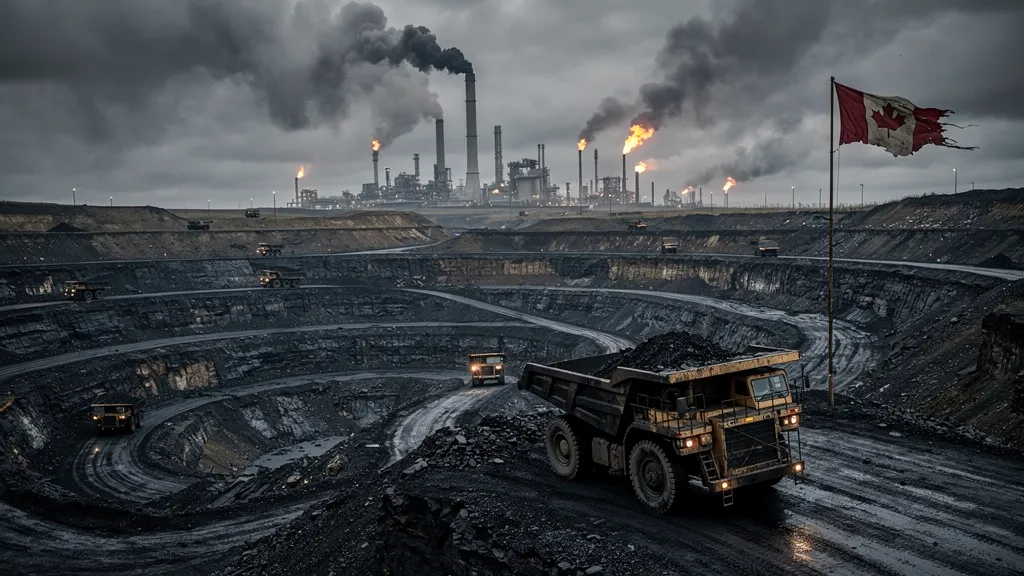
The Rideau Institute is very pleased to present this important climate essay by RI Senior Fellow, Craig Martin. (An earlier version appeared in his sub stack “Law in Crisis’.)
While there has been much discussion of the Canada-Alberta Memorandum of Understanding (the MOU), there has been rather less analysis of whether it is consistent with Canada’s international law obligations.
There has been much debate about the new Memorandum of Understanding (the MOU) that the federal government and Alberta signed in December. As most readers will recall, it envisions a rapid expansion of Alberta’s production of bitumen from its oil sands fields, the development of a new pipeline from Alberta to the Pacific coast for export to Asia of the expanded oil production, and a massive expansion of electrical generation for data centers and new infrastructure. The agreement also provides for all of this to be facilitated by a streamlining of the climate and energy-related regulatory process, exempting Alberta from many of the current climate and energy policy regulations that would be implicated by the planned expansion.
Canada has both legal and moral obligations to do its fair share in responding to the climate change crisis….
While there has been much discussion of the Canada-Alberta Memorandum of Understanding (the MOU), there has been rather less analysis of whether it is consistent with Canada’s international law obligations. Canada has both legal and moral obligations to do its fair share in responding to the climate change crisis—and understanding what these obligations are, and whether policies such as this new agreement violate them, should be of considerable importance to all Canadians.
[T]he MOU, even before implementation, violates Canada’s fundamental obligations in relation to the global response to the climate change crisis…
This essay will begin by explaining what Canada’s legal obligations are, as articulated most recently by the International Court of Justice; discuss briefly Canada’s climate record to date; and then examine the key elements of Alberta MOU. Finally, the essay will analyze and explain how the MOU, even before implementation, violates Canada’s fundamental obligations in relation to the global response to the climate change crisis—obligations owed not only to other states, but to both present and future generations of Canadians and other peoples all around the world, including those who are far less responsible for the crisis. In the end, Canada owes both legal and moral obligations to all humanity.
Canada’s Legal Obligations – The ICJ Decision
It is best to begin by explaining Canada’s obligations. Canada is a party to both the UN Framework Convention on Climate Change (UNFCCC) and the Paris Agreement, which provide the core treaty-based obligations of states in relation to climate change. But, as was made clear in several recent groundbreaking decisions of international tribunals in just the last year, the obligations of states regarding their response to the climate change crisis have many sources and are quite broad. We may get a sense of these by examining the Advisory Opinion on the Obligations of States in Relation to Climate Change, delivered by the International Court of Justice this summer.
The Science
The International Court of Justice accepted the scientific consensus that human activity, primarily anthropogenic greenhouse gas (GHG) emissions… [were] unequivocally causing a warming climate…
Before turning to the obligations, it should be noted that the Court, like the Inter-American Court of Human Rights (IACtHR), the European Court of Human Rights (ECtHR), and the International Tribunal for the Law of the Sea (ITLOS) before it, confirmed that the periodic reports and analysis by the Intergovernmental Panel on Climate Change (IPCC), along with reports from such UN agencies as the United Nations Environmental Programme (UNEP), provide the “best available science” on climate change.
The ICJ accepted the scientific consensus that human activity, primarily anthropogenic greenhouse gas (GHG) emissions, were increasing the concentrations of GHGs in the atmosphere (primarily CO2, methane, nitrous oxide, and fluorocarbons) and unequivocally causing a warming climate—which in turn was leading to ever worsening consequences, such as: extreme weather events; changing climatic and weather patterns leading to droughts, food insecurity, and ultimately population displacement; rising sea levels; loss of biodiversity; and increased risks of pandemics, political instability, and armed conflict.
…a continuation of current policies and actions [globally] will lead to an increase of 3.8º C by 2100…[with] catastrophic consequences for human civilization
It should also be noted that while we have already passed a temperature increase of 1.3º C above pre-industrial levels, and that we are almost certain to exceed the global goal of 1.5º C, the projected pathways suggest that a continuation of current policies and actions will lead to an increase of 3.8º C by 2100—an increase which most experts suggest will have catastrophic consequences for human civilization, including the failure of many states, international institutions, and very possibly the entire international legal order.
Turning to the substance of the opinion, the court answered two questions submitted by the General Assembly, which in short were: (1) what are the obligations of states under the broad corpus of international law to protect the climate system from anthropogenic GHG emissions; and (2) what are the legal consequences arising from a breach of those obligations. After hearings that involved submissions by more countries and intervenors than any case in the court’s history, the ICJ handed down a unanimous opinion that has been generally regarded as momentously significant. Below is a brief overview of the most salient points.
The Obligations
The Court held that under both the core climate change treaties, the UNFCCC and the Paris Agreement, as well as customary international law, states have a duty to prevent significant harm to the climate system. They must fulfill this duty by acting with due diligence and using all means at their disposal to prevent activities within their jurisdiction or under their control from causing such harm.
Moreover, the Court held that the developed states that are listed in Annex I of the UNFCCC (including Canada) have additional obligations in relation to mitigation, given that they are responsible for most of the historic GHG emissions.
This obligation requires states to adopt measures to lower their GHG emissions, and to reduce GHG concentrations in the atmosphere, with a view to achieving the Paris Agreement objective of limiting global warming to 1.5º C above pre-industrial levels. Under the Paris Agreement, the state parties have specific obligations to periodically submit ever more ambitious plans, known as “nationally determined contributions” (NDCs), committing to specific measures the states will undertake to reduce emissions. Moreover, the Court held that the developed states that are listed in Annex I of the UNFCCC (including Canada) have additional obligations in relation to mitigation, given that they are responsible for most of the historic GHG emissions.
The court also noted that all states have an independent obligation to cooperate with one another in the effort to prevent harm to the climate system.
The court also noted that all states have an independent obligation to cooperate with one another in the effort to prevent harm to the climate system. This obligation is essential, because the climate change crisis constitutes a collective action problem—meaning that while it is a problem that will cause harm to all states, the immediate cost of individual action is high and direct individual benefits are neither immediate nor certain, and thus all states have incentives to free-ride and shirk from doing their fair share to address the problem. Thus, the climate change crisis will be impossible to resolve in the absence of cooperation and coordination.
States … have a separate obligation under international human rights law to prevent harm to the climate system.
Finally, the Court recognized that a safe, clean and healthy environment, which includes a safe climate system, is a necessary precondition to the exercise of the most fundamental human rights, such as the right to life and the right to health. States thus have a separate obligation under international human rights law to prevent harm to the climate system. The Court noted that all these duties are erga omnes obligations—that is, obligations owed to all other states and all mankind, not merely to one’s own citizens or any specific country.
Consequences of Violation
In response to the second question [posed to the Court], regarding the consequences of violation, the Court surprised many by holding that the violation of any of these obligations would implicate the full range of legal consequences under the international law of state responsibility. Moreover, a failure to take appropriate action to protect the climate system from the activity of private actors, such as transnational corporations engaged in fossil fuel extraction and production, would constitute an internationally wrongful act attributable to the state, and for which the state would be responsible.
Even more surprising to some, the court dismissed the concerns about causation and attribution that have dogged much of climate change litigation—namely, the problems of determining which precise emissions might be the cause of any specific harm—by holding that such issues relate to the determination of remedies rather than the question of violation itself. The court observed that the obligations were primarily that of conduct rather than result, and thus the violation could be established without proving specific harm. In terms of remedies, however, a violation could give rise to duties to cease the unlawful conduct, make restitution, reparation, or compensation to those harmed, depending on the causal nexus that could be established.
Canada’s Climate Change Record
…based on national policies and action (as opposed to its pledges)—prior to the announcement of the Canada-Alberta MOU—Canada’s climate posture was “highly insufficient” and consistent with a global trajectory of a dystopian 4º C increase by 2100.
Canada’s current climate change policy in relation to these obligations, even before the development of the MOU, has not been good. Canada withdrew from the Kyoto Protocol, the first climate treaty established under the UNFCCC, on the eve of being in breach of that treaty in 2012. Its efforts under the Paris Agreement have not been that ambitious, and policy goals have not been likely to achieve even those insufficient targets.
In its first NDC, as required under the Paris Agreement, Canada committed to reduce GHG emissions by 30% below 2005 levels by 2030. It submitted its most recent NDC in February 2025, which committed to reduce GHG emissions by 45-50% below 2005 levels by 2035, with a long-term goal of being net-zero by 2050.
[T]he Canada-Alberta MOU weakens and revises many of …[Canada’s] 2030 Emission Reduction Plan’s measures…
That last commitment, to be net-zero by 2050, was enshrined into law in the Canadian Net-Zero Emissions Accountability Act. To meet these targets, the government laid out a sector-by-sector plan, the “2030 Emissions Reduction Plan,” which covers GHG emission reduction targets for electricity, oil and gas, industry, building, waste, agriculture, and nature-based solutions (primarily land use). As will be examined below, the Canada-Alberta MOU weakens and revises many of the 2030 Emission Reduction Plan’s measures and makes the achievement of its goals highly unlikely.
But these goals were themselves insufficient in terms of Canada doing its “fair share” in reducing GHG emissions for the purpose of achieving the Paris Agreement objectives of keeping global warming to 1.5º Celsius. The Climate Action Tracker, a highly regarded platform that tracks national and global policies against the Paris Agreement goals, reports that Canada’s NDC target, in terms of Canada’s “fair share” of the global effort required to meet the Paris Agreement goals, is “insufficient,” and is actually consistent with a global trajectory towards a relatively catastrophic 3º C increase by 2100. What is more, it determined that based on national policies and action (as opposed to its pledges)—prior to the announcement of the Canada-Alberta MOU—Canada’s climate posture was “highly insufficient” and consistent with a global trajectory of a dystopian 4º C increase by 2100.
The Canada-Alberta MOU
[T]he agreement is much broader and more far reaching than the development of another pipeline…
Expanded Production & Increased GHG Emissions
Much of the news of the MOU has focused on the pipeline between Alberta and the coast of British Columbia, but the agreement is much broader and more far reaching than the development of another pipeline. The pipeline, which is projected to have a capacity of 1 million barrels a day, is simply a means of distribution for a huge expansion of Alberta’s bitumen extraction, processing, and export industry, to provide increased exports to Asian markets. Moreover, it constitutes a development of fossil fuel export infrastructure that will lock-in increased extraction, processing, and export for years to come. The plan assumes that its impact on GHG emissions will be offset by a massive carbon capture, utilization and storage (CCUS) project.
Bitumen has more than twice the carbon intensity of regular North American crude oil—meaning that the GHGs emitted in the process of extraction and processing (not final combustion) are higher than the emissions from the production of North American crude oil. The increases in volumes anticipated by the MOU project would translate into large increases in carbon dioxide equivalent (CO2e) emissions from Alberta’s oil sands sector. For reasons we will explore below, this will not be entirely offset by the CCUS plan, and thus will almost certainly result in increased GHG emissions overall for Canada.
Relaxed Regulation of Oil & Gas and Energy Generation Industries
The overall impact of [exempting Alberta from planned environmental regulations] is expected to undermine Canada’s ability to reach either of its net-zero goals by 2050.
In addition to this direct increase in GHG emissions from the increased production of bitumen, other aspects of the plan will also likely have significant indirect consequences for Canada’s climate change goals—including the relaxation of related laws and regulations, including the carbon pricing standards under the Greenhouse Gas Pollution Pricing Act (the GGPPA), and the federal Clean Energy Regulation (CER) enacted under the Canadian Environmental Protection Act.
In particular, the MOU contemplates the establishment of both a carbon pricing equivalent agreement and a methane equivalency agreement. This involves an abandonment of the federal government’s planned regulation of Alberta’s oil and gas sector emissions, which would have required a net-zero industry by 2050, and substituting in its place a provincial carbon pricing and regulation regime that will be more relaxed. Indeed, one explicit feature of this will delay for five years the scheduled imposition of reduction limits on methane, one of the most potent greenhouse gases.
[T]he federal Clean Energy Regulation (CER)…was considered a core element of Canada’s climate change policy, and essential to achieving the goal of a net-zero economy by 2050.
Similarly, the MOU contemplates exempting Alberta from the federal Clean Energy Regulation (CER). This regulation was designed to cap and progressively restrict GHG emissions from fossil-fuel electricity generation, with binding limits projected to come into force in 2035, and to result in a net-zero electrical generation system by 2050. This was considered a core element of Canada’s climate change policy, and essential to achieving the goal of a net-zero economy by 2050.
Providing Alberta with an exemption to that regime, to be replaced by a yet-to-be negotiated industrial pricing agreement under an Albertan emissions reduction program, will likely lead to other Provinces seeking similar relief, and an overall weakening of the national regime. The overall impact of this is expected to undermine Canada’s ability to reach either of its net-zero goals by 2050.
While the MOU thus contemplates a weakening of regulation of the carbon intensity of the electrical generation industry in Alberta, it also projects a huge expansion in electrical generation, both in Alberta and nationwide. The MOU calls for the development of a policy framework to incentivize large investments in data center development and “Canadian sovereign computing.”
Proponents view this as a foundation for Alberta to become a major energy supplier for energy-intensive industries nationwide. The MOU does not mandate that the additional power generation be driven by clean energy, and at least some part of this expansion in power generation will no doubt be fueled by fossil fuels, including most obviously Albertan bitumen and gas.
The Carbon Capture, utilization and storage (CCUS) Offset
[T]he technology required for the carbon capture and storage at the scale contemplated is very much speculative—and … even if it is developed exactly as contemplated, current projections suggest that the CCUS could not entirely offset the increased GHG emissions.
Finally, all the increased GHG emissions that the foregoing will surely entail are to be offset by the development of a major carbon capture, utilization and storage (CCUS) project to be developed by the Pathways Alliance, “for the purpose of making Alberta oil among the lowest carbon intensity produced barrels of oil in the world.” Indeed, the MOU contemplates the pipeline and oil sands expansion to be contingent upon the development of the CCUS project, which is to be facilitated by federal tax incentives and private investment. But while both the technology and markets for an increased production of bitumen already exist, the technology required for the carbon capture and storage at the scale contemplated is very much speculative—and as will be discussed below, even if it is developed exactly as contemplated, current projections suggest that the CCUS could not entirely offset the increased GHG emissions.
How the MOU Violates Canada’s Obligations
The Climate Change Impacts of the MOU
…aspects of this plan are entirely inconsistent with Canada’s international legal obligations.
The MOU is just a broad-strokes agreement, and much of the detail is still to be determined—and thus there remains quite a bit of uncertainty regarding the likely consequences, both in terms of direct results and second and third order effects. Nonetheless, it can be said with some confidence that aspects of this plan are entirely inconsistent with Canada’s international legal obligations. Indeed, the very negotiation and conclusion of the MOU, even before any steps are taken towards its implementation, likely constitute violations of Canada’s obligations under both treaty (the UNFCCC and the Paris Agreement) and customary international law.
First and foremost, the plan contemplated by the MOU will, with virtual certainty, result in a direct increase in Canada’s GHG emissions. The extraction and processing of bitumen prior to export will result in GHG emissions in the order of 57 Kg CO2e per barrel on average, if we assume the best currently available and emerging technologies for reducing its carbon intensity. At one million additional barrels a day under the MOU, that translates into an increase of GHG emissions of 20.8 Mt CO2e per year—and that is just the direct increase from the oil production itself.
Based on Canada’s current GHG emissions—which, of course, Canada has a legal obligation to reduce—that would comprise an approximate 3% increase in annual GHG emissions. Some other analyses have put the numbers higher, at 28.9 Mt CO2e, or closer to a 4% increase. All of that will be additional to an already increasing rate of GHG emissions from Alberta’s oil sands, which comprises a significant percentage of all Canadian GHG emissions (10-12% in recent years, according to government reporting).
The CCUS would not be capable of entirely offsetting this projected increase, even if all the assumed and somewhat speculative technological developments pan out as hoped. To understand this, we need to return to the issue of bitumen’s carbon intensity. While there has been a reduction of this over the years, due to improvements in technology, a peer-reviewed analysis of emerging technologies in the Canadian oil and gas sector predicts that emerging extractive technology could lower upstream emissions (i.e. the GHG emissions from extraction and processing, not consumption) by only another 20 Kg CO2e/bbl. But that is considered ambitious and technologically uncertain—and that still equates to some 37 Kg CO2e/bbl. At that carbon intensity, one million additional barrels a day contemplated by the MOU, would translate into an additional 13.5 metric tons of carbon dioxide equivalent (Mt CO2e) per year at the very least.
The CCUS plan, however, is reported to be aiming for capture and storage of only 4.2 Mt CO2e per year by 2030 (though some sources suggest as high as 10-12 Mt CO2e per year), increasing over time to a maximum of 62 Mt CO2 per year by 2050. And it is also acknowledged that the CCUS plan simply cannot capture emissions from all aspects of the production process. Thus, even with decreasing carbon intensity and increasing carbon capture, this all leaves a significant “net zero gap” for many years beyond 2030, even if all the speculative technological advances pan out perfectly, and if it is possible to scale the CCUS project as quickly as it is possible to expand bitumen production.
…the bottom line is that it appears almost certain that the expansion will result in an increase in net GHG emissions.
Now, to be clear, some of these numbers are still rough estimates—albeit developed by experts, based in part on preliminary information—but the bottom line is that it appears almost certain that the expansion will result in an increase in net GHG emissions. This is no doubt why the MOU itself includes the replacement of the federal regulation of Alberta’s tar sands industry, which had mandated that it achieve net-zero by 2050, with a provincial pricing scheme that will be more relaxed.
The plan in the MOU, therefore, contemplates a direct increase in GHG emissions strictly from the process of expanding bitumen extraction and processing. Added to this will be the likely increases in GHG emissions resulting from the increased energy production contemplated, and the relaxation of the various regulatory regimes that the MOU proposes. Many critiques predict that other provinces will very likely seek their own exemptions from the Clean Energy Regulation, thus further weakening and undermining a regime that is central to Canada’s plans for meeting its climate change objectives.
All of this will mean a slowing in the rate of reduction of GHG emissions nationwide.
What is more, the MOU provides for exemptions to permit Alberta to establish its own carbon pricing regime, which will not be required to meet or exceed the federal “minimum national stringency standards” as required under the federal Greenhouse Gas Pollution Pricing Act (GHGPPA). That will likely erode the crucial concept of a minimum national carbon pricing standard—which will in turn create uncertainty, regulatory fragmentation, and instability in the carbon markets. All of this will mean a slowing in the rate of reduction of GHG emissions nationwide.
The MOU’s Violations of Climate Obligations
[The Canada-Alberta MOU] clearly violates the obligations of due diligence that the ICJ identified as being at the heart of the fundamental obligation to protect the climate system.
All of the foregoing can be boiled down to this: the government of Canada entered into an agreement with Alberta that will clearly increase GHG emissions, and relax legislation and regulation designed to reduce GHG emissions, making it far less likely that Canada can possibly achieve its climate change policy objectives.
That quite clearly violates the obligations of due diligence that the ICJ identified as being at the heart of the fundamental obligation to protect the climate system. Canada’s policies were already insufficient to fulfill Canada’s part in achieving the 1.5º C objective under the Paris Agreement, as noted earlier, but now Canada is effectively lowering its own objectives.
…the obligation [for states] to…do their fair share …is “stringent” due to the gravity of the threat, meaning that states must put forward the most ambitious goals possible.
The ICJ stressed that in the preparation of climate change plans, for purposes of submitting their NDCs (“nationally determined contributions” )in accordance with their obligations under the Paris Agreement, states have limited discretion. States must exercise due diligence to ensure that their NDCs fulfil their obligation, to effectively do their fair share in the global effort to achieve the Paris goal of limiting average temperature increase to 1.5º C above pre-industrial levels. And the court noted that the obligation is “stringent” due to the gravity of the threat, meaning that states must put forward the most ambitious goals possible.
What is more, states have an affirmative obligation to implement those increasingly ambitious plans—and that obligation too is one of conduct, which requires parties to act with due diligence in taking the measures necessary to implement domestic mitigation measures, “including in relation to activities carried out by private actors.” Canada’s NDC was already insufficient, but the MOU makes it likely impossible for Canada to even fulfill its NDC.
The MOU, with its contemplation of increased GHG emissions, and relaxation of legislation and regulation that was established to help achieve Canada’s climate change goals, arguably constitutes a clear violation of these obligations. And they are violations now. One does not have to await the realization of increased GHG emission to establish a breach of obligation, as the agreement itself is a violation of the due diligence requirements. As the Court further held, in considering the consequences of violation (para. 427):
Failure of a State to take appropriate action to protect the climate from GHG emissions—including through fossil fuel production, fossil fuel consumption, the granting of fossil fuel exploration licences or the provision of fossil fuel subsidies—may constitute an internationally wrongful act which is attributable to the state. The Court also emphasizes that the internationally wrongful act in question is not the emission of GHGs per se, but the breach of the conventional and customary obligations…pertaining to the protection of the climate system from significant harm…
Obligations to Whom?
This is where the concept of climate justice becomes important.
It is worth pausing to consider to whom Canada owes these obligations, and who is being harmed by their violation. For some readers, there may be an element of abstractness to the discussion of the law thus far, and a tendency to discount the importance of these obligations. But to be clear, Canada owes these obligations to other countries, and through them the peoples of those other countries, not to cause them harm by contributing further to the climate change crisis.
This is where the concept of climate justice becomes important. The developed Western states, including Canada, are largely responsible for the vast majority of historic GHG emissions, and thus for creating the problem of climate change. The peoples of the developing world are far more vulnerable to the increasingly negative consequences of climate change, and yet they are the least responsible for causing the problem. They are calling upon the developed world to help solve the problem, and to provide financial support for them to adapt to the consequences. This is why the ICJ held that Annex I countries have a particular obligation to engage in ambitious mitigation and to prevent further harm to the climate.
Moreover, Canada owes obligations to its own people, both those here today, especially younger Canadians, but also to those who will come hereafter. The Court held that states have independent obligations under international human rights law to protect the climate system, given that a clean and safe environment is a precondition for all other rights.
Constitutional courts in The Netherlands (Urgenda v. Netherlands) and Germany Neubauer v. Germany), among others, have held that the government lowering of national climate change goals and weakening climate change regulation constitutes a violation of those human rights obligations, including the right to life. The German Constitutional court went further, and held that the government’s lowering of GHG reduction targets constituted an effective transfer of climate risk to younger and later generations, which violated their right to equality and gave rise to intergenerational inequity. In the case of Mathur v. Ontario similar issues are currently being litigated before the Canadian courts.
[F]rom a moral and ethical standpoint, by expanding our exports of oil and gas, we are most certainly contributing to the world’s ongoing addiction to fossil fuels and slowing the transition to clean energy, thereby undermining the global effort to confront the crisis.
One final point is worth noting. Canada is only legally responsible for the GHG emissions created within Canada. Thus, it is responsible for what are called “upstream” emissions, which are created by the extraction, processing and distribution of the oil and gas from Alberta, as well as any emissions from the consumption of that oil and gas within Canada (known as “scope 3” or “downstream emissions).
The scope 3 emissions caused by the consumption of the oil and gas which Canada exports overseas are not part of the formal GHG emissions for which Canada is legally responsible—they count towards the GHG emissions of the countries in which they are consumed. Yet from a moral and ethical standpoint, by expanding our exports of oil and gas, we are most certainly contributing to the world’s ongoing addiction to fossil fuels and slowing the transition to clean energy, thereby undermining the global effort to confront the crisis.
The reality is that Canada’s climate change record is poor. At several Conferences of the Parties (COPs) under the UNFCCC, it was among the small group of petro states that worked to block efforts to include language on the phasing out of fossil fuels. Canada withdrew from the Kyoto Protocol on the eve of missing its targets, and its efforts towards reducing GHG emissions under the Paris Agreement have been insufficient. Canada’s per capita GHG emissions are among the very highest in the world. Yet there is a strong sense in the public discourse that, given the size of our population and economy, we do not really have to do that much, and that it is really for the large states like China and the US to carry the load.
Canada is clearly not doing its share, and with this MOU, it is further weakening its efforts to help the international community in confronting what is the greatest challenge humanity has ever faced.
But the ICJ and other courts and tribunals have all made crystal clear that this is a global crisis, involving an intractable collective action problem, and that every country must do its fair share. Canada is clearly not doing its share, and with this MOU, it is further weakening its efforts to help the international community in confronting what is the greatest challenge humanity has ever faced. It is fitting to end with a few words from the final appeal of the ICJ opinion:
The questions posed by the General Assembly represent more than a legal problem: they concern the existential problem of planetary proportions that imperils all forms of life and the very health of our planet. International law, whose authority has been invoked to by the General Assembly, has an important but ultimately limited role in resolving this problem. A complete solution to this daunting, and self-inflicted, problem requires the contributions of all fields of human knowledge, whether law, science, economics, or any other. Above all, a lasting and satisfactory solution requires human will and wisdom—at the individual, social and political levels—to change our habits, comforts and current way of life in order to secure a future for ourselves and those who are yet to come.
It is surely time for Canadians to demand that the Canadian government live up to Canada’s responsibilities, and that we do our part in meeting this global crisis.
Photo credit: Craig Martin with AI assistance (Alberta oil sands)
The comments are closed.